Steampunk
Steam & Brass
Steampunk imagines an alternate history where Victorian engineering never gave way to silicon, where gears, pipes, and brass fittings power the future. On the web it is a rich intersection of antique typography, industrial texture, and ornate mechanical detail that appeals to communities of makers, collectors, and world-builders.
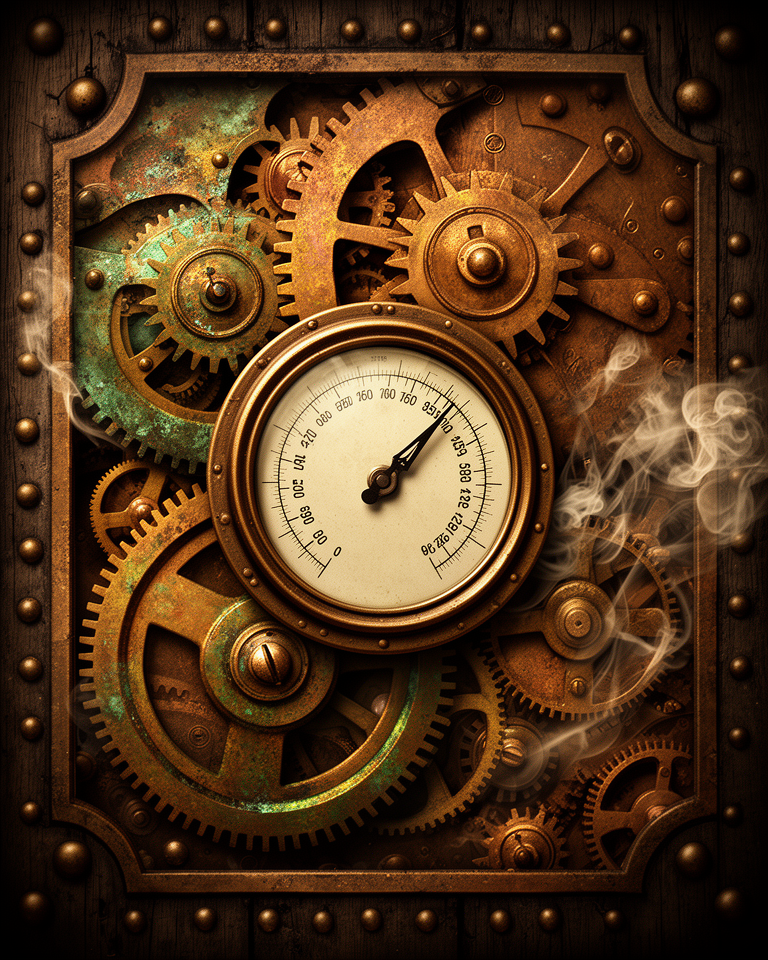
From literary subgenre to visual community
Steampunk has always lived at the intersection of literature, making, and visual culture. What began as a named genre in science fiction has grown into a self-sustaining aesthetic community with its own conventions, craft traditions, and design vocabulary.
The genre gets a name
K.W. Jeter coins "steampunk" in a letter to Locus magazine, naming the literary subgenre that imagines Victorian-era steam-powered technology extended into an alternate future.
Online visual community
DeviantArt and early forums build a thriving steampunk visual community; artists develop a shared vocabulary of brass, leather, and ornamental clockwork.
Mainstream niche
Conventions, cosplay, and maker culture bring steampunk to a mainstream niche; it becomes a recognisable aesthetic even to people who have never encountered the literary genre.
Stable specialist community
Stable niche: cons, games, tabletop RPG publishers, and bespoke craft brands use the aesthetic confidently within a well-defined and loyal audience.
Victorian machinery as design language
Brass & Copper Palette
Oxidized metal tones (aged brass, copper, dark bronze) serve as the primary surface colors. These warm, complex hues suggest age, craft, and the patina of objects that have been used and valued.
Victorian Typography
Ornate serif display faces, decorative initials, and aged letterpress-style headline setting. Typography channels the printing traditions of the 19th century: dense, ornamental, authoritative.
Gear & Cog Motifs
Mechanical details (gears, springs, rivets, pipe fittings) used as structural ornament throughout the layout. These elements must look functional even when purely decorative.
Aged Paper Texture
Sepia-toned, worn, and foxed paper surfaces behind all content and interface elements. The paper is the canvas, and its age and imperfection are part of the message.
For audiences who live in the world
Steampunk design is most effective when the audience already inhabits or is being invited into the world it evokes. It is not a veneer applied to any product; it is a commitment to a worldview, and the audiences who love it will immediately know whether that commitment is genuine.
- 01Gaming & Tabletop RPGVideo games, board games, and RPG publishers whose worlds are set in Victorian alternate history
- 02Cosplay & Convention CommunitiesEvent sites, costume sellers, and community hubs serving the active convention circuit
- 03Artisan Craft BrandsBespoke jewellers, leather workers, and makers whose products reference steampunk aesthetics
- 04Alternative History FictionPublisher sites, author portfolios, and book marketing for steampunk and gaslamp fantasy novels
Worlds built in brass and ink
The strongest steampunk design examples appear in game marketing and community-oriented sites where the audience participates in building the world. These examples show how the aesthetic serves narrative immersion.
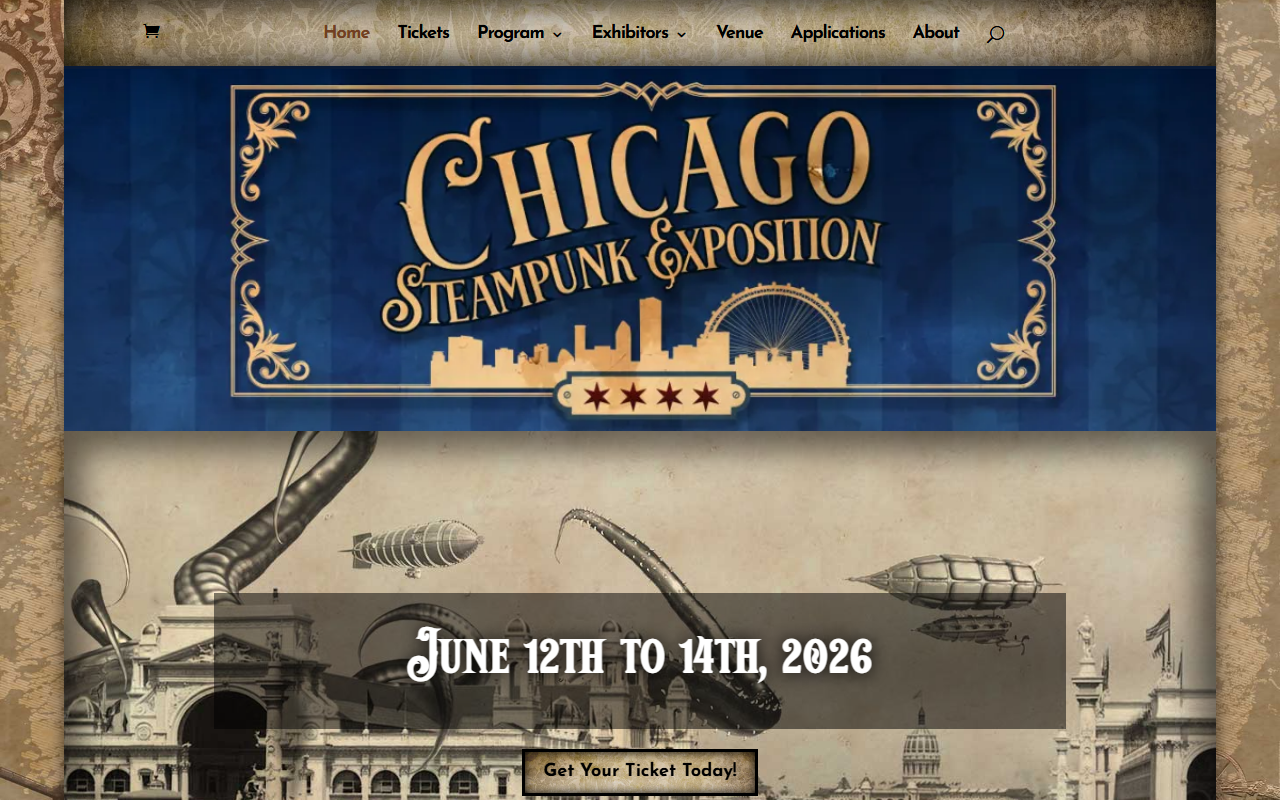
The convention site commits fully to the aesthetic: aged paper textures, brass-toned accents, Victorian typography, and gear motifs throughout — design that lives inside the world it promotes.
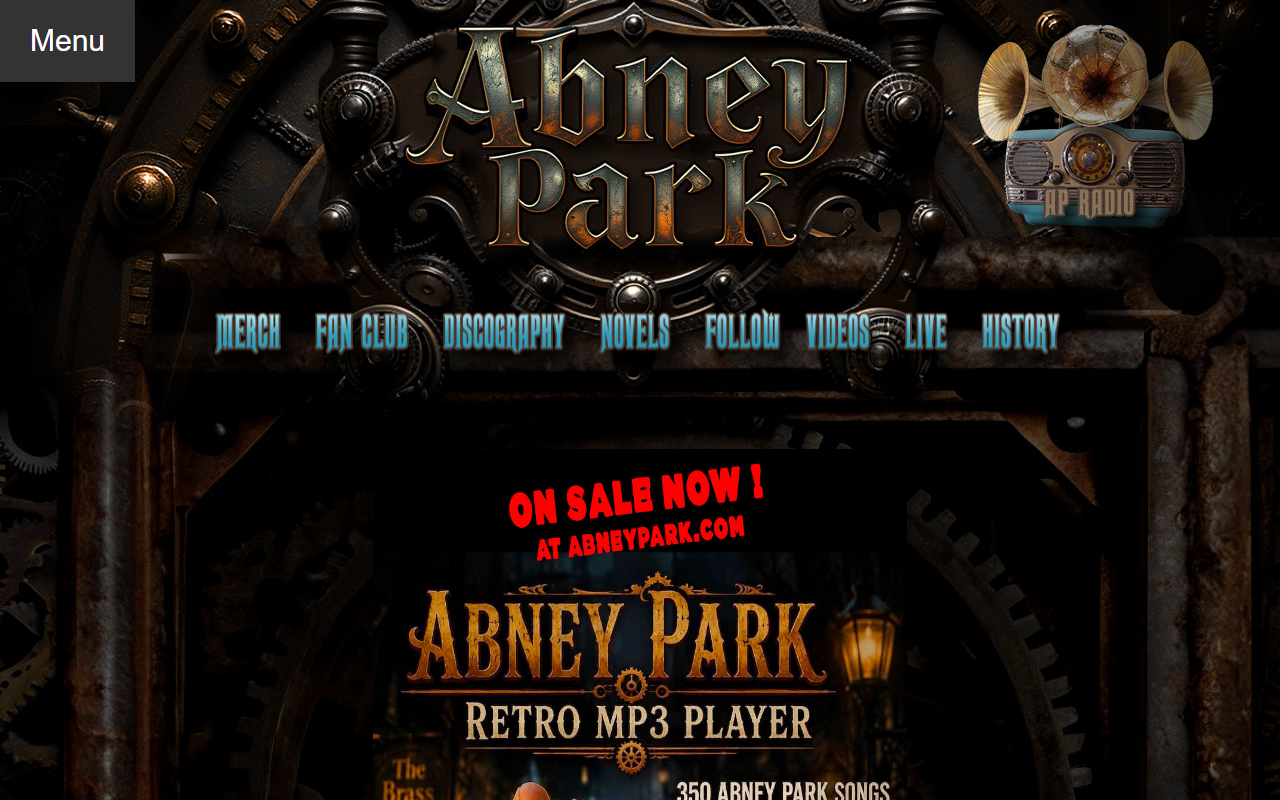
The self-described airship pirates built their entire brand identity around steampunk visual language: dark leather tones, ornate typography, and a site that feels like a dispatch from an alternate 1890s.
The trade-offs
+ Strengths
- Deeply immersive: when executed well, the aesthetic creates a complete sense of world
- Beloved by its community; steampunk fans are loyal and enthusiastic advocates
- Rich visual vocabulary gives designers genuinely distinctive raw material to work with
- Difficult to copy casually: the depth of execution required filters out superficial imitation
− Watch-outs
- Extremely niche audience: outside the community, the aesthetic reads as costume or cosplay
- Production-heavy: custom textures, illustration, and typography investment is significant
- Accessibility challenges with dark, textured backgrounds and ornate display typefaces
- The style is so specific that any misapplication is immediately visible to core audiences
Builds coming soon
This style hasn't been built yet. Check back later.